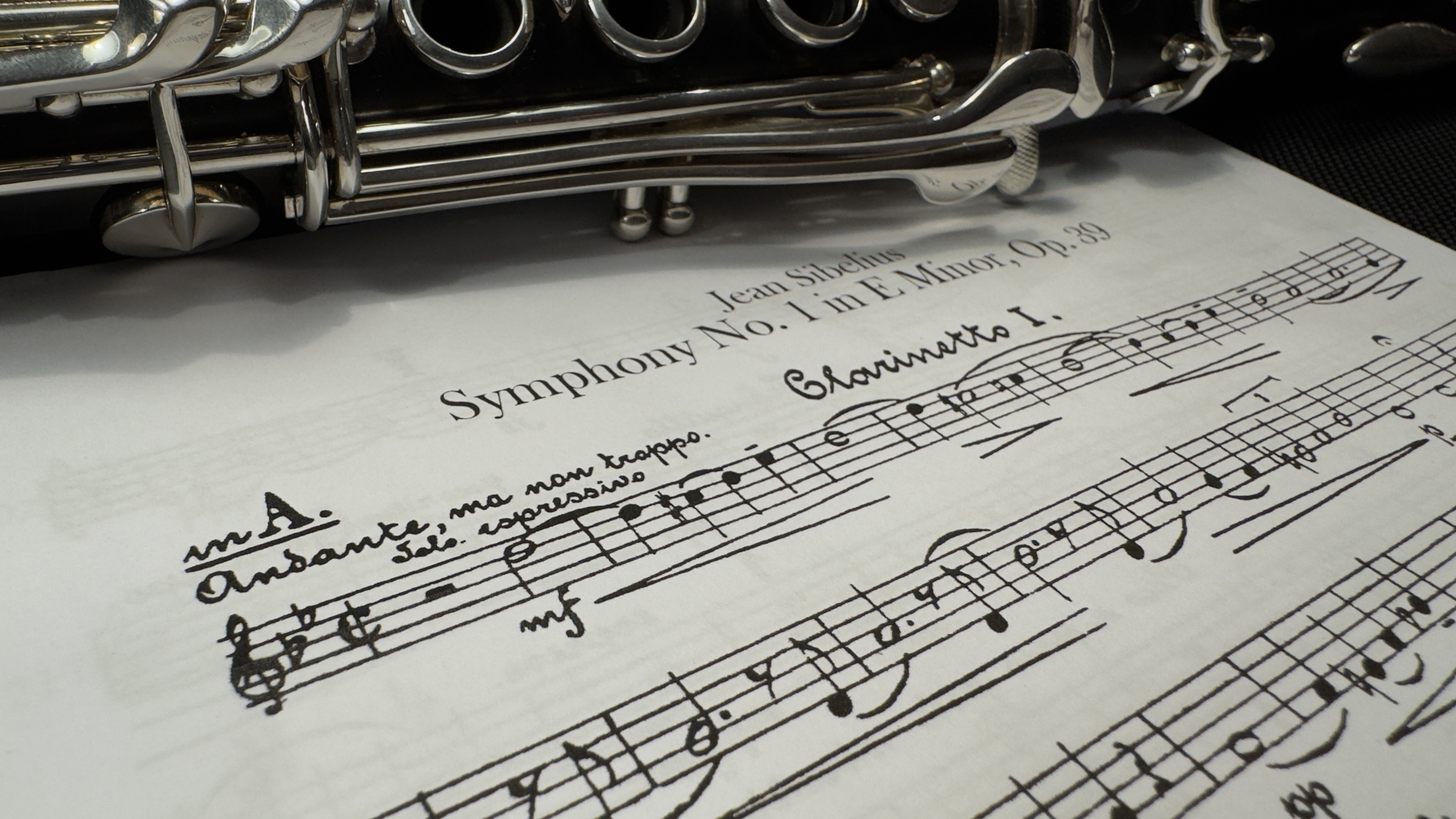
About the Book
Clarinet
Consciousness
~56,000 words · Complete manuscript
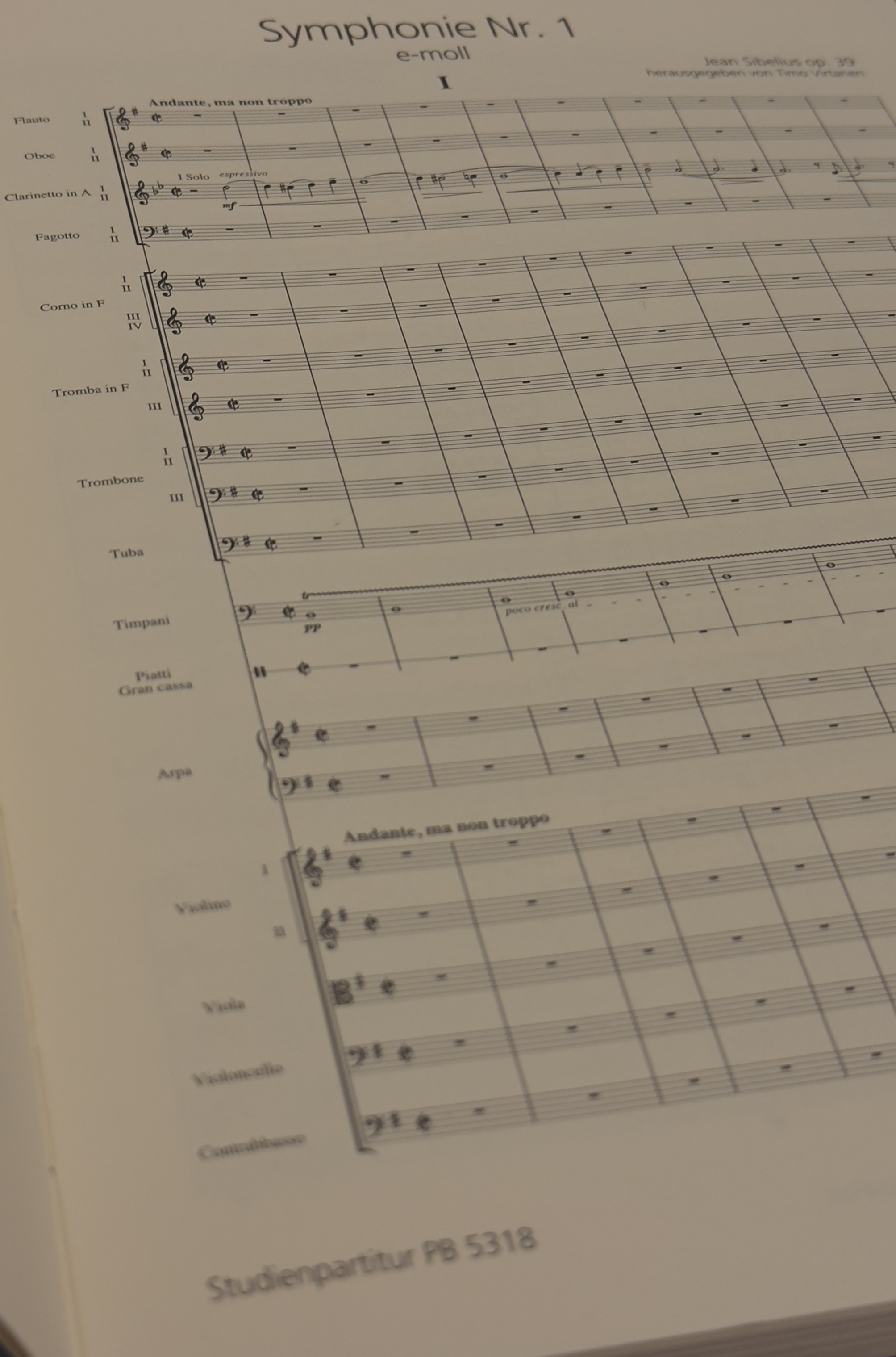
Structure
First Movement
Andante, ma non troppo
The Apollo era. Building radios. Learning music. Control theory. The foundations of everything that follows.
From the Apollo era: building radios, learning to play music, learning the control theory of survival.
Second Movement
Andante (ma non troppo lento)
Orchestral playing. Satellite modem design. The discovery of aphantasia. A framework assembles.
The toolkit. Orchestral playing, designing satellite modems, discovering aphantasia — and the framework that will later explain everything.
Third Movement
Scherzo
Skills mastery. Human performance. The Goonhilly Earth Station story.
Skills mastery. How we do it, what we can achieve, and the Goonhilly story.
Fourth Movement
Quasi una Fantasia
The timing argument. Consciousness as signal processing. The theory hidden in plain sight.
The argument. Consciousness as timing. The theory hidden in plain sight.
From the Manuscript
From Chapter Fifteen — Movement III
Once the machine was rebuilt and operating faultlessly, our second attempt at selling it was equally troublesome. Our second customer in the USA was about to sign the purchase order when an internal organisational snag arose. Another division of the company thought they didn't need us; they could design and build the equipment themselves. I needed to call them.
"I'm travelling," I was told. "Meet me in the Hotel Hassler, Rome, tomorrow evening."
This was 1994. The internet was in its infancy. I called the travel agent and booked a flight: British Airways, Manchester to Rome. As I arrived at the check-in desk, I was told there was a fault with the aircraft. I was rebooked with Alitalia.
My window seat gave me a wonderful view of the Alps. The meal had been served when the port engine gave a sudden jolt. I looked out and saw it again. The change in torque almost seemed to rip it off the wing.
The captain took a stroll down the aisle and paused near my seat, casually taking a look at the view.
A few moments later, the cabin crew were purposefully working their way down the aisle, large refuse sacks in hand, taking the food trays and unceremoniously whisking them away. The engines were now both set to idle. Passengers silently looked around. The only sound was the air quietly whistling by. And the Alps looked closer.
"Aeroplane descending unexpectedly syndrome", it turned out, was a real phenomenon.
The only other words uttered during that flight were the captain's two-second announcement:
"We're diverting to Turin."
Everything else was silent until the aircraft glided to a standstill at the end of the runway, emergency vehicles screaming after us.
Being on a plane full of Italians, I experienced the full range of human emotions that day. The silent dread: We're all going to die. The elation: We're alive. We survived. The realisation: We expected to land in Rome. We're in Turin. The chaos: Get me on the next flight to Rome immediately.
I eventually arrived in Rome after midnight, many hours later than planned, paid a fortune to rent a car and found my way to the Hotel Hassler. To say it was grand would be an understatement. It was a Renaissance masterpiece of frescoes and marble. The manager showed me to my room. Silk tapestries and heavy velvet curtains framed the view out to one of the most iconic locations in Europe — the Spanish Steps. A giant, sumptuous bed. Hand-painted wallpaper. This wasn't just luxury — this was history.
He handed me a note.
"I'm still up. Let's get dinner", it said.
I quickly dropped my things and met my business contact in the lobby. "There's a little restaurant around the corner that's open all night. Let's go there."
We both ordered spaghetti and were rude to each other for the entire meal.
"You're a startup with no track record," he said.
"This is a very difficult technical problem and you don't know how to solve it," I said.
Back in my room at 3:00am, I contemplated the situation. Our first contract ruined by a defective demo, the second by an argument with the customer. I had barely made it there alive. My flight home was early in the morning. This room! This room was going to cost a fortune. I resolved there and then that the least I could do was to skip breakfast. I couldn't afford another wasted expense.
At the checkout desk I was charged for breakfast anyway.
Several months later, I was on another flight to the USA. I flicked through the in-flight magazine. There was an article titled Top Ten Hotels of the World. I nearly fell out of my seat turning to the last page.
"Hotel Hassler, Rome. Whatever you do, don't miss the buffet breakfast in the seventh-floor terrace restaurant with the best views in Europe."
From Chapter Twenty — Movement IV
My most recent encounter with the Symphony was last year in London. Unusually, not since the very first time we met, Irene was sitting right next to me again, rather than just in front and to the left.
We were in the audience, looking forward to the performance and craning our necks to see our daughter in the viola section as the audience found their seats.
Reading the programme notes and the list of musicians playing I was amazed to see the first clarinet was going to be played by an old youth orchestra friend. What a coincidence. There were still a few minutes until the start. I had to sneak up and see her.
"I love playing this" she told me. "It's such a great solo, and everyone thinks it's so hard. Don't let on will you."
It was beautiful. And wonderful to be at Isobel's first performance of 'our Symphony'. She was playing on an instrument made by my dad.
After he retired, dad began a new 'career' as a violin maker. In his inimitable style he combined brilliance with the bizarre. Using the exact contour plans from Stradivarius, he engineered modifications to a range of violas including an internal ducted port, a sideways fingerboard and a giant bulbous extension — all in the name of viola radiance.
Isobel's instrument was mostly conventional. No upper corners. "They're not necessary," dad said. Geared pegs — the latest engineering accessory — absolutely necessary. Other than that, an absolutely beautiful instrument.
We have all had the chance to play together in the past. Dad and Isobel would share a viola desk. An amazing experience. My brothers too. Wrexham Symphony Orchestra — the place my orchestral playing started with La Forza del Destino staged a performance of Mahler 2 at The Bridgewater Hall. What a night!
Musical enjoyment together. And in this moment — the famous second subject melody in the last movement of the Symphony — Sibelius is happy to facilitate the with his multi-sensual experience.
The music seems eager to unfold further. From the long, sweeping melody, the trumpets and trombones emerge — radiant, building towards a great climax. Beneath them the strings and horns pulse in syncopation, driving the surge forward.
And then — it is cut short.
Dad died during Covid. He never heard the performance.
The instrument was there. Isobel was there. We were there. But he was not.
Syncope: to cut off, to strike away. In medicine, a loss of consciousness. In music, to displace the expected beat. Sibelius interrupts not only rhythm, but expectation itself.
What if consciousness isn’t about complexity — but about time?
The Central Argument
The book's central argument is that consciousness is not only a product of complexity, processing power, or any single region of the brain. It is a function of timing.
The human nervous system operates two fundamentally different signalling networks. Myelinated nerve fibres — insulated, fast, efficient — carry information at speeds that enable reflex, coordination, memory and learned skill. They are the infrastructure of the subconscious: the vast, rapid machinery that allows a clarinettist's fingers to find the right keys without deliberation, or a satellite tracking system to hold lock on a moving spacecraft.
Unmyelinated fibres are different. Slower, noisier, operating within an integration window of roughly 100 milliseconds — they are the pathways where sensory experience lingers long enough to be felt. This, the book argues, is where consciousness lives: not in speed, but in the delay. Not in the signal, but in the time the system takes to process it.
Digital signal processing provides the framework to describe this with precision. The same elegance that governs how a satellite modem locks onto a carrier signal, or how a correlator extracts meaning from noise, describes how the brain distinguishes what matters from what doesn't — and how the neurotransmitters that regulate attention, memory, and emotion are fundamentally timing and gain controls in a biological feedback loop.
The argument is grounded in engineering rather than theoretical physics — making it accessible, testable, and rooted in lived experience rather than abstraction. Consciousness, on this account, is not a quantum phenomenon but an integration effect: the brain's equivalent of a matched filter, extracting signal from noise within a precisely bounded time window.
Running through the entire arc of the book, the symphony acts not only as the template but as the specification for how the mind works. Sibelius was deeply interested in aspects of cognition and the human condition, and how to depict this in his writing. Some readers may even notice that the structure of the symphony is completely reflected in the arc of the narrative.
Comparable Titles
The Man Who Mistook His Wife for a Hat
Oliver Sacks
The gold standard for neuroscience as personal narrative — rigorous, humane, accessible to any reader.
This Is Your Brain on Music
Daniel Levitin
Popular neuroscience of music from someone with professional standing in both domains.
The Music Instinct
Philip Ball
The physics and biology of musical experience — the closest comparable treatment of acoustics.
Being No One
Thomas Metzinger
Consciousness studies for the serious general reader — positions the book's argument in a credible intellectual context.
Kluge
Gary Marcus
Short, witty, intellectually confident popular science. The tonal model for what this book aspires to.
Complete manuscript available.
Full proposal and sample chapters on request.